Microchimerism & Migration

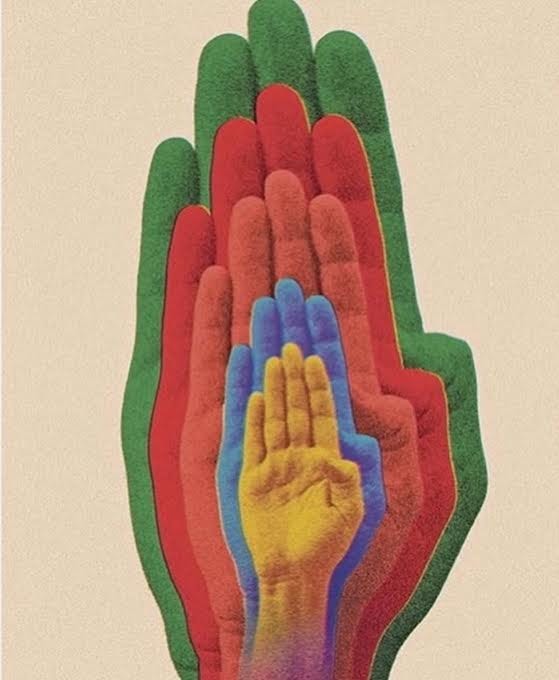
Image via @high_sun_low_moon
An amber glimmer as the monarch shooting like a spark from the bonfire of autumn goldenrod and milkweed reminds me of the journeys we initiate but do not finish. That monarch will soon begin the migration south, following the sun, but that singular butterfly will never arrive. It will die and “pass the baton” onto the next generation. It takes butterflies three to five generations to complete a year’s migration back and forth, with one “suprageneration” that lives only for the southern sprint. What does it mean to begin a journey knowing we will never live to experience arrival or homecoming? That kind of long vision, decoupled from the hero’s individual quest, seems to me to be a much more ecologically sustainable frame of reference. It puts me in mind of the Haudenosaunee Confederacy’s Great Law of Peace that instructs us to consider how a decision will not just effect those alive and present, but those seven generation into the future.
Our bodies, it turns out, are already braided into genetic currents that flux both forward and backward through many generations and migrations. Evolution is not a straightforward march forward into individual optimization. It’s greatest ingenuity is often demonstrated when it steps sideways into symbiosis, fusing rather than forking. One of my favorite examples is that mammalian placentas may feel profoundly animal, profoundly human, but they are really possible because of an ancient retrovirus that invaded our cells, teaching us how to create the syncytiotrophoblast epithelium layer of the placenta that keeps a mother’s immune system from attacking what could be considered a foreign body, while still invading the uterus wall, establishing blood vessel support for the growing fetus. And is the ancient viral “edit” that allows for one of the most astounding new discoveries complicating our ideas of genetic inheritance. The placenta, once simplistically viewed as being relatively impregnable, only carefully allowing in the nutrients and support to grow a child, is actually a much more porous vessel.
When I lost a child to miscarriage back in late 2019, I was comforted when I came across the groundbreaking research into a phenomenon called fetal microchimeral cells. Despite the belief that we are genetically pure, the product of happy parental haploid cells, with immune systems acting as border patrol, identifying and attacking anything genetically alien, it turns out we are much less genetically straightforward than we previously believed. We are home to migratory cells from our mothers, grandmothers, ghost twins, and sometimes elder siblings. And, in turn, when we were in the womb, we sent our own cells back into our own mother’s ecosystems. These are novel cells, often with two nuclei, that we commonly only see in placentas or bone marrow. Cells that hold the potential to become other cells in our other organs. People who have been pregnant, even after early miscarriages or abortions, still carry living cell lines of these chimerical cells that research show may be implicated in autoimmunity and healing. While initially the preponderance of these fetal cells in diseased organs or wounds of recently pregnant mothers seemed to suggest that these cells “caused” illness, updated research shows that this correlation is not necessarily causation. In fact, it is now much more commonly believed that these cells are attracted to inflammation to make repairs. Likewise, mother’s chimerical cells that infiltrate the fetus, have been demonstrated to protect infants from early illness and infection, teaching their immune systems how to properly function.